

In São Paulo, for the fourth round of the FIA World Endurance Championship (FIA WEC), fierce competition is expected at the Interlagos circuit. With qualifying taking place this Saturday and the race tomorrow, Sunday, teams and organizers are focused on this latest stage—as well as on the energy transition essential to achieving more environmentally friendly racing and mobility.
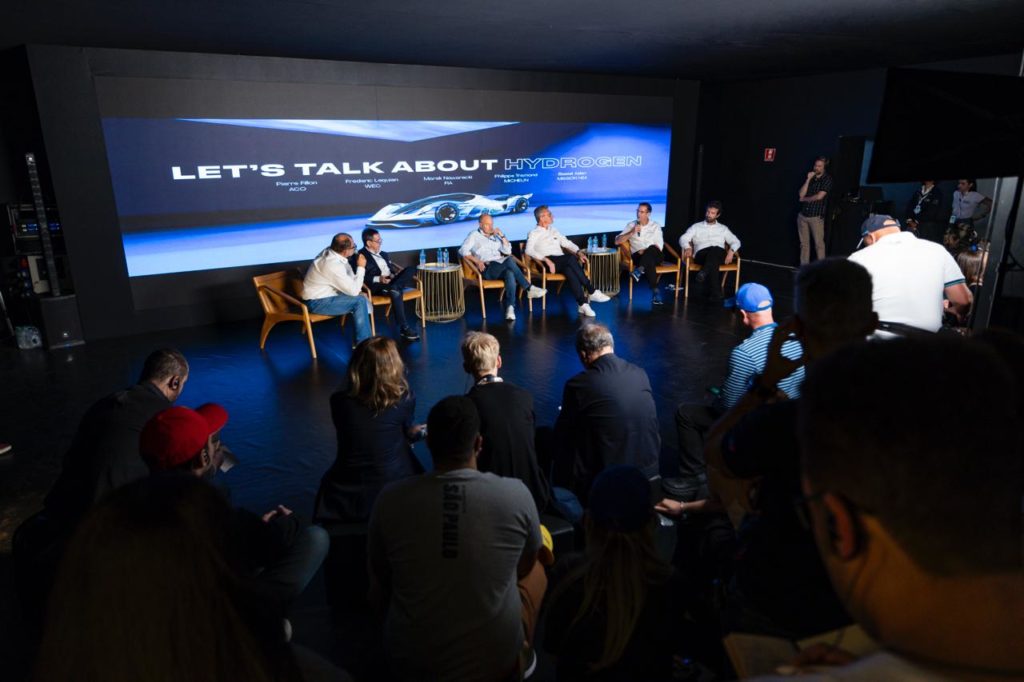
To this end, a conference was held this Saturday in the fan zone, within the area dedicated to the Automobile Club de l’Ouest’s “120 Years” exhibition. The session, focused on the decarbonization of motorsport and mobility in general, brought together:
- Pierre Fillon, President of the ACO
- Frédéric Lequien, CEO LMEM
- Marek Nawarecki, Director of the track department at the FIA
- Bassel Aslan, Technical Director of MissionH24
- Philippe Tramond, Technical Director of Michelin Motorsport
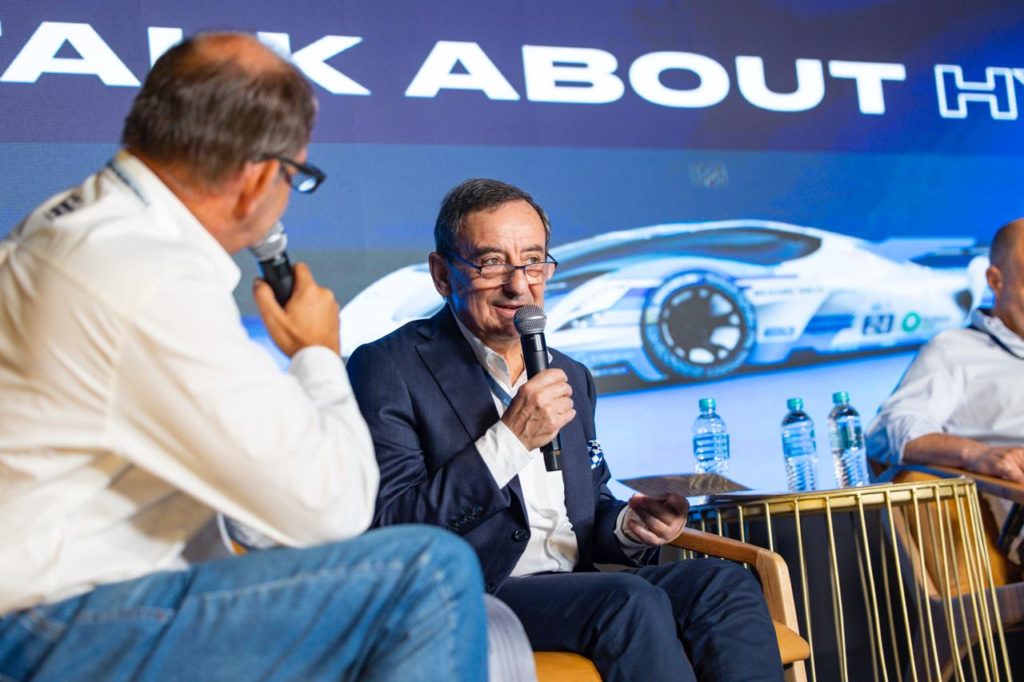
Speaking on the occasion, Pierre Fillon emphasized that “The 24 Hours of Le Mans was created to serve as an innovation laboratory for manufacturers, and that has been the case for over 100 years. Following research into safety, performance, and vehicle comfort, the energy transition has been a crucial theme since 2005. Hybrid technology has enabled a 50% reduction in fuel consumption, and today, hydrogen offers the potential for zero-CO2-emission racing.”
Frédéric Lequien, CEO of LMEM, noted that “The WEC, which travels the globe, has observed this same expectation among nations: the decarbonization of mobility. While realities differ, the expectation is there. We are committed to this goal while upholding our core values: competition, spectacle, speed, and action. Decarbonization and spectacle must never be viewed as mutually exclusive. Brazil is a prime example. Here, we welcome enthusiasts and connoisseurs alike. At the same time, the city of São Paulo boasts one of the largest electric bus fleets. The two objectives, spectacle and decarbonization, are not in conflict.”
Representing the FIA, Marek Nawarecki confirmed that the aim is “to deploy strategies involving various approaches and actions to shape the regulations. We must ensure technological diversity. Hydrogen is a key topic, as are sustainable fuels, renewable materials, and logistics. We need to work together with manufacturers to maintain a focus on sustainability.”
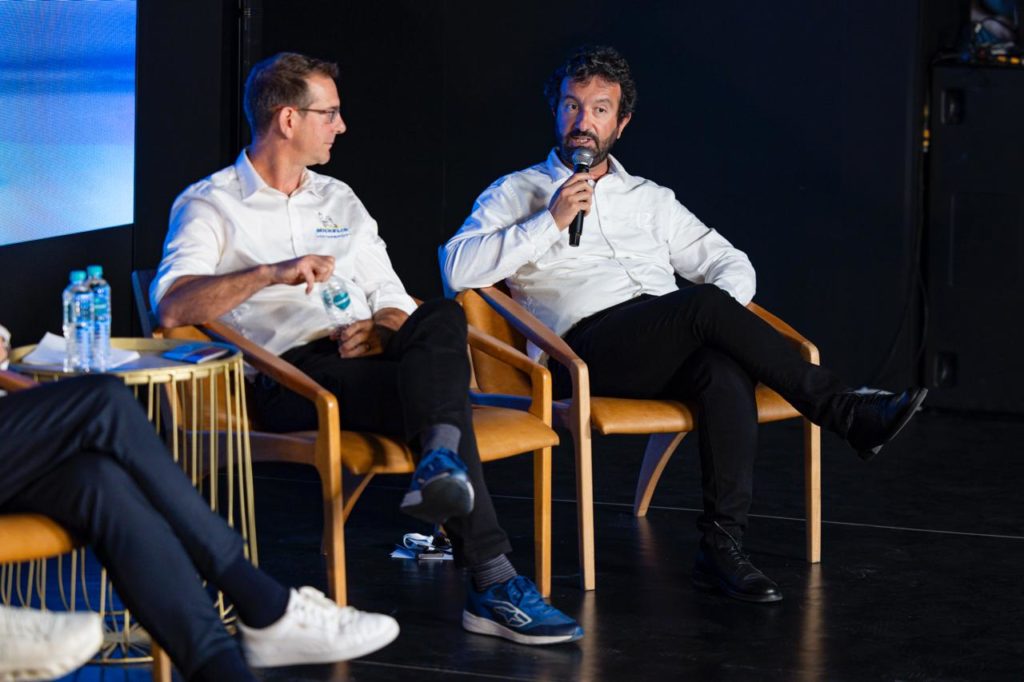
Philippe Tramond of Michelin Motorsport explains the French brand’s challenge: “We have set a goal for 2030 to have 40% of our products made from 100% renewable or recyclable materials. Last year, we were at 30%. Motorsport enables us to test new materials and work towards these targets. For instance, through MissionH24, we are deploying a tire made from 71% renewable materials; in the FIA WEC, the figure is 50%. We want to be increasingly responsible, and motorsport allows us to showcase that commitment.”
Bassel Aslan, Technical Director of MissionH24, outlined the goals for the upcoming H24EVO: “This is the program’s third prototype. It is now focused on performance, featuring a chassis built specifically for this technology. We previously proved the technology’s reliability and functionality by competing in four races (in the Michelin Le Mans Cup). Now, we want to demonstrate that a hydrogen prototype can perform just as well as a fossil-fuel-powered one. MissionH24 is a pioneer in the hydrogen category, as we are working to overcome many of the hurdles associated with this new technology. We are collaborating with the FIA and the ACO to establish the regulatory framework for the hydrogen class, particularly regarding safety and refueling. We have crucial technical data to provide in preparation for this future category.”
Regarding that future category, Pierre Fillon added: “During the last 24 Hours of Le Mans, we announced—alongside the FIA—that hydrogen cars will be eligible to compete alongside Hypercars starting in 2030, both in the WEC and at the 24 Hours of Le Mans. A roadmap is in place.”
The ACO President highlighted the long-standing collaboration with TotalEnergies on this decarbonization effort: “We started in 2022 with Excellium Racing 100 (100% sustainable fuel) and have now moved to Excellium Racing Evo, which offers improved efficiency. TotalEnergies also joined the hydrogen program right from the start.”
Frédéric Lequien confirmed: “We are living through an exciting time, one we are approaching with humility. Welcoming an H2 category is a huge challenge requiring a collective effort involving the ACO, the FIA, the manufacturers, and all the host cities. In São Paulo—I can say this—we can feel that interest. It is very motivating.”
In the fan zone, spectators can get a firsthand look at the ACO’s hydrogen program, run in collaboration with H24Project, as MissionH24 is displaying a mock-up of the future H24EVO. This is the project’s third prototype, following the LMPH2G and the H24. They also have the opportunity to speak with Bassel Aslan, MissionH24’s Technical Director, tomorrow, Sunday morning, at 10:00 AM (3:00 PM French time).